
Optimising the data framework for the take-back system through a digital product

“Circularity is already a core part of our business at Wehlers, through the use of recycled materials and the operation of a take-back system. At this early stage of the company, being challenged through the accelerator programme is valuable in helping us think more critically about how circular economy principles can be strengthened across our entire value chain.”
- Henrik Holm, Co-founder, Wehlers
Den strategiske mulighed
Wehlers can transition from production-focused circularity to comprehensive lifecycle management by improving their take-back scalability. Currently, the company lacks the granular, product-level data needed to assess the actual condition of returned chairs, which limits their ability to prioritise high-value recovery strategies like repair or refurbishment over simple recycling.
Omstillingsruten
Wehlers' transition path focuses on establishing unique digital identity system using QR codes or chips to provide chair-level traceability. The roadmap proceeds from basic tracking to the implementation of a diagnostic grading system for returns, eventually allowing customers to view the chair's history. This digital backbone supports more efficient remanufacturing and prepares the company for future regulatory requirements regarding product transparency.
Resultatet
The primary outcome is the establishment of a traceable circularity model that simplifies the take-back process and improves inspection efficiency. By collecting data on product failures and return frequencies, Wehlers can optimise its repairs and strengthen its brand through transparent storytelling. This data-driven approach fosters consumer trust and ensures that materials are circulated through the most valuable life cycles possible.
Kontekst
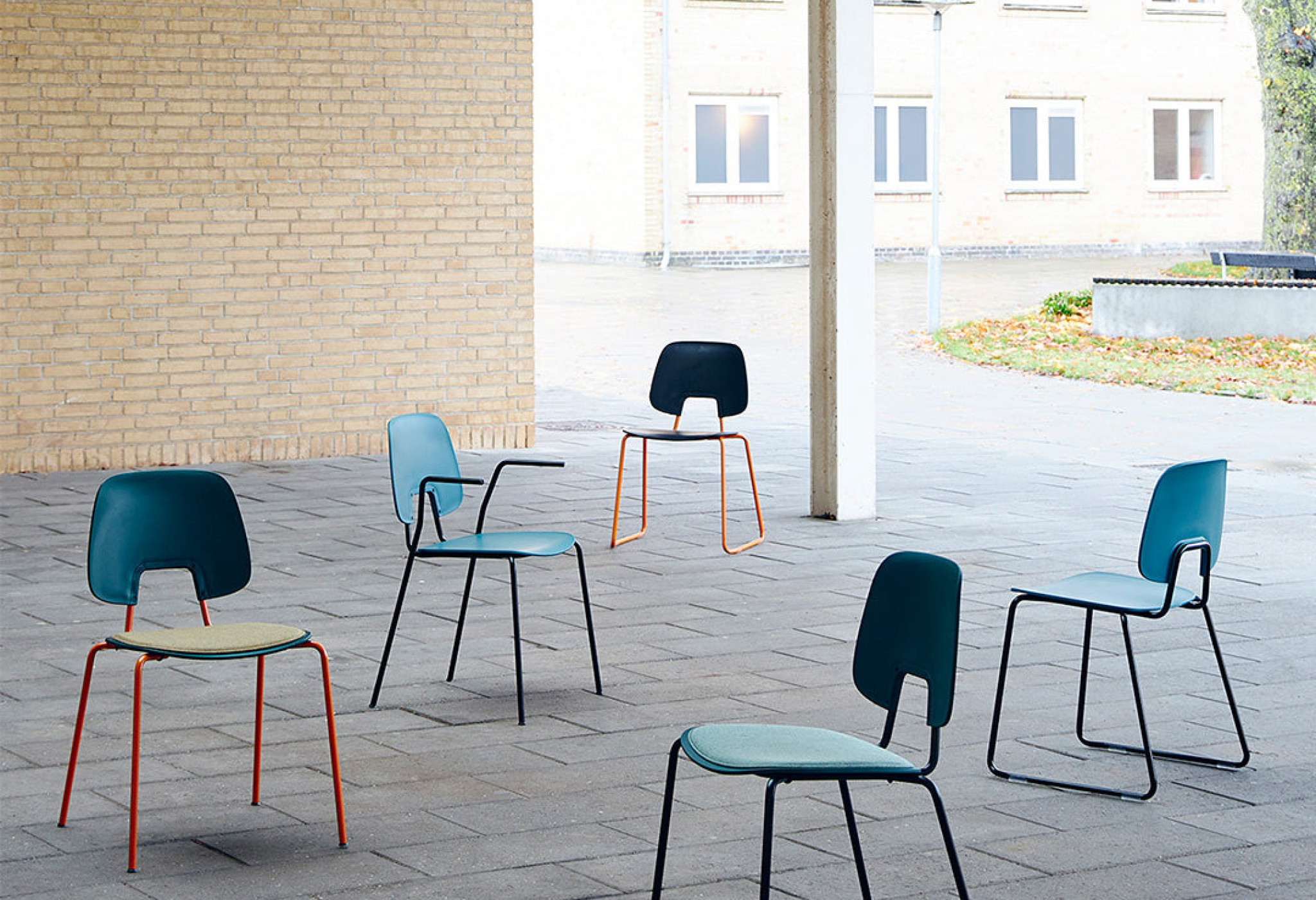
Wehlers, a Danish furniture company founded in 2017, produces the R.U.M. Chair, which is constructed from 100% recycled materials, including polypropylene from fishnets and e-waste, as well as recycled steel. The company already operates a circular business model featuring a take-back system that offers a 20% discount on future orders, alongside rental agreements for short-term B2B needs. Wehlers is already circular with their material selection and take-back system, which makes it feasible and relevant to explore more opportunities and solutions to become even more circular across their entire value chain.
Den strategiske mulighed
Analysis identifies a significant opportunity for Wehlers to move beyond production-centric circularity by establishing a stronger link to the post-use phase and maintaining control once the chair enters the use phase. While a take-back system currently exists, it relies heavily on customer proactivity, which may lack sufficient incentive compared to simple disposal options. By systematising data regarding sales dates and actual usage, Wehlers can adopt a more proactive approach, reaching out to customers at the optimal time for product recovery.
Currently, the company lacks the granular, product-level data needed to assess the actual condition of returned chairs, which limits their ability to prioritise high-value recovery strategies like repair or refurbishment over simple recycling.
By collecting product information across life cycles, Wehlers can demonstrate verified circular performance to a market increasingly crowded with vague sustainability claims. This post-use value retention allows the company to differentiate its brand while gaining a comprehensive overview of return volumes and component failure modes.
Omstillingsruten
For Wehlers circular transition the dimensions “Take-back and End-of-Life Strategies” and “Technology and Data” are prioritised. The recommended Transition Path centres on the implementation of a chair-level digital identifier delivered via QR codes or embedded chips or NFC tags. The first phase involves equipping all new and remanufactured chairs with this ID to enable basic track-and-trace functionality supported by an internal digital platform for Wehlers and its partners. This infrastructure links physical products to back-end systems containing spare parts, take-back instructions, and concrete lifecycle data.
In the second phase, the system adds "collect and detect" functions, utilising a grading system to categorise returned items for reuse, repair, or dismantling. In parallel, Wehlers must formalise internal return processes and scale its logistics capabilities by collaborating with external partners like DHL.
Finally, the platform will be expanded to allow customers access to the repair and ownership history of their furniture. This phased approach aligns the company with upcoming Digital Product Passport regulations while ensuring data infrastructure grows in tandem with production volume.
Resultatet
Implementing this transition will optimise Wehlers' circularity by making the return and repair process more intuitive for consumers. The digital identifier will provide reliable lifecycle information, enable informed decision-making and improved take-back capacity planning as well as provide critical data on why wear or failure occurs in specific components. Increased visibility into end-of-life pathways makes actual circular performance measurable, allowing for consistent decisions on reuse, remanufacturing, or material recycling. As a result, the take-back system will be capable of handling increasing volumes through standardised processes for inspection, cleaning, and sorting.
Insights into return motivations will support targeted incentives and more effective customer engagement. A key commercial outcome is the creation of a transparent branding narrative, where new owners can read the individual "journey" of their refurbished chair, fostering trust and engagement.
Ultimately, these interventions shift the company toward full circularity, ensuring that high-quality secondary packaging and furniture components are retained within the loop rather than lost as waste.
Refleksioner
The solution's effectiveness depends heavily on user behaviour, as the system requires consistent scanning and updates by both partners and customers to maintain data reliability. To remain viable at its current stage, Wehlers has prioritised a lower-cost, simple QR setup, though this involves a trade-off regarding the depth of data available in the long run.
Næste skridt
Wehlers should pilot the digital identifier initiative with a small, selected batch of customers to test data quality and operational effort. This should include exploring incentive mechanisms to encourage users to participate actively. Following the pilot, the company must define clear roles for data ownership and assess the system's performance at higher volumes before a full-scale rollout.
Micro-Accelerator. January 2026 - offered by ready2LOOP & DTU Course, Design for Circular Economy
Virksomhed
Wehlers
Fokusområde for omstillingsruten

Teknologi & Data
Produktionsvirksomheder

Tilbagetagning & Strategier for Endt Produktliv
Produktionsvirksomheder