
Redesigning “Matas Striber” packaging and revitalising the take-back system

“Persano is trying to include more recycled plastic in the bottles. Trying to design to not use more plastic than necessary and trying to figure out how it’s treated in the end-of-life cycle. We want to increase the recyclability (...) It could be interesting to see how we could redesign the value chain, so that it (the packaging plastic) doesn’t go through so many hoops before returning to Persano.”
– Rikke Bæk, Group ESG Manager, Matas Group

Den strategiske mulighed
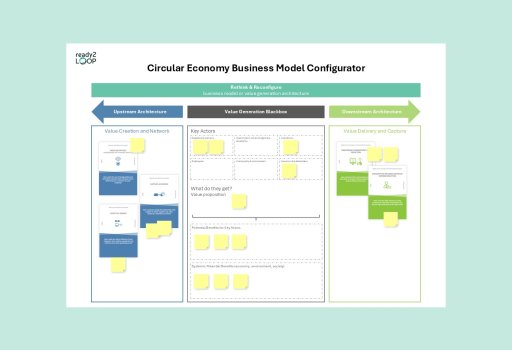
Matas can boost circularity by focusing on mono-material packaging and modular refill solutions to reduce contamination. By introducing a third-party recycler to prepare returned materials specifically for its manufacturer, Persano, Matas can establish a closed-loop system. Downstream, redesigning collection infrastructure and offering incentives represents a major opportunity to differentiate from competitors and increase operational efficiency.
Omstillingsruten
The transition focuses on redesigning return infrastructure with guided disposal and formalising collaborations with third-party recyclers to ensure high material purity. Matas will utilise incentive mechanisms consumer engagement. This path prioritises mono-material packaging to align with regulatory recycling targets while reducing environmental fees.
Resultatet
The primary outcome is the establishment of a "Recyclability-Driven" model that aligns Matas with EU PPWR recycling targets. By shifting to mono-materials and establishing closed-loop partnerships, Matas secures high-quality secondary packaging and decouples its growth from virgin material use. This enhances the brand's sustainability profile and minimises costs associated with producer responsibility.
Kontekst
Matas Group is the leading Nordic omnichannel retailer in beauty, health, and personal care, operating over 500 physical stores. This study focuses on the in-house brand “Matas Striber”, which utilises PP, PE, and PET plastic packaging. While Matas has operated a take-back system since 1995, it faces challenges regarding return rates and the purification of collected plastic and glass materials. Operationally, Matas acts as a retailer rather than a producer, with Persano serving as the primary manufacturer for its in-house brands.
Den strategiske mulighed
Matas has a significant opportunity to strengthen its recycling design and multiple-use strategies through close collaboration with Persano. While a take-back system and some recycled content already exist, there is room to scale up through packaging redesign and improved material recovery infrastructure. Upstream, Matas’ clear opportunity lies in focusing on mono-material packaging, durable designs, and modular refill solutions. Establishing a third-party stakeholder to shred and prepare returned packaging for Persano would allow Matas to explore a true closed-loop potential. Downstream, the company can redesign in-store collection infrastructure to improve quality assurance and implement incentive-based schemes, such as loyalty points or discounts, to better engage consumers and strengthen reverse flows. By investing in these areas, Matas can improve the customer experience and respond to the high consumer demand for socially responsible and environmentally protected beauty products.
This transition requires balancing high ambitions for circularity with the practicalities of organisational adaptability and technical limitations.
Omstillingsruten
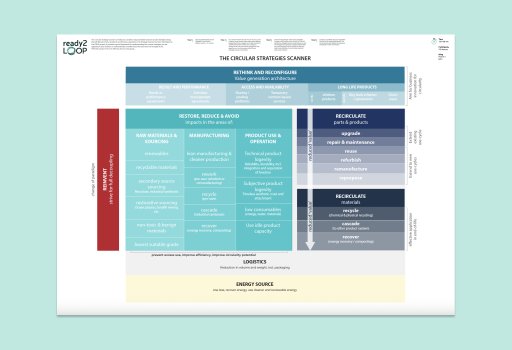
Matas’ ambition to scale an effective take-back system translates into a transition path centred on “Take-back & End-of-Life Strategies” and “Packaging & Service Innovation”.
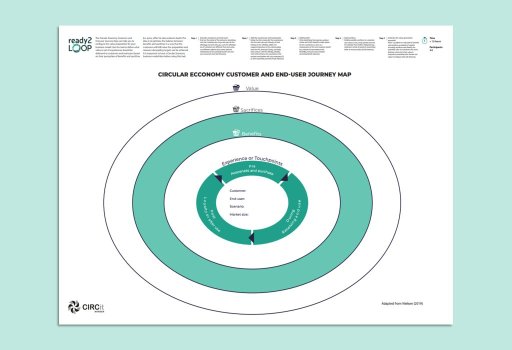
For packaging, Matas should focus on reducing virgin material usage through redesign and the adoption of certified recycled plastic, supported by R&D into more recyclable polymers. The recommended transition further includes a take-back system that centres on redesigning in-store return bins with product-specific, guided disposal to ensure clean separation of plastic types (PE, PP, and PET). This involves creating a user-centric experience with increased visibility and clear guidance. Initially, collection should be limited to specific private-label packaging to reduce contamination.
As infrastructure stabilises, Matas should launch communication campaigns and staff training to address the lack of knowledge currently limiting participation. Incentive mechanisms, such as deposit-based buy-back schemes linked to club points, will be used to raise return rates.
The long-term goal is a fully integrated circular system where mono-material packaging and design-for-recycling meet a 65% recycling target, eventually incorporating durable private-label bottles with refill pouches.
Resultatet
These interventions will strategically elevate Matas' circular maturity by shifting the company from a reactive to a proactive "Recyclability-Driven" model. By adopting design-for-recycling principles and a closed-loop system with Persano, Matas ensures a larger volume of its annual units are repurposed into high-quality secondary packaging rather than lost as waste.
This transition aligns the company with the European Commission’s Packaging and Packaging Waste Regulation (PPWR), which mandates a 65% recycling rate. Ultimately, this model decouples business growth from virgin resource use and strengthens the company's performance across sourcing, operations, and take-back dimensions.
Refleksioner
The effectiveness of the solution depends on the validation of key assumptions: that consumers will return packaging if given the right infrastructure and incentives, and that contamination can be halted through improved take-back design. The sources note that Matas currently has limited visibility into end-of-life outcomes, making formal stakeholder agreements and enhanced data tracking essential for success.
Næste skridt
Matas should operationalise the Transition Path by launching pilot projects to test the new infrastructure and incentive schemes. The company must establish clearer stakeholder agreements and formalise material ownership with its logistics and recycling partners. Finally, after stabilising these improvements at scale, Matas can explore higher-ambition options such as systemic circular packaging and refill solutions for selected products.
Micro-Accelerator. January 2026 - offered by ready2LOOP & DTU Course, Design for Circular Economy
Virksomhed
Matas
Fokusområde for omstillingsruten

Emballage- & Serviceinnovation
Emballageproducenter

Tilbagetagning & Strategier for Endt Produktliv
Emballageproducenter