
Extend service agreements to include take-back systems of bed screens

” The accelerator program helps us assess our readiness for a circular transition. We have focused heavily on product quality and longevity, and while we see strong potential in take-back systems, implementing them is a significant step.”
– Jonas Fribo-Søndergaard, Sustainability Specialist, Silentia
Opportunity
Silentia has the opportunity to leverage its high-quality, modular screen designs to transition into a circular business model by regaining control of products at their end-of-life. By implementing a take-back system, the company can facilitate material value retention and recirculate high-value aluminium and steel components. This shift allows Silentia to move from a linear business model to one based on lifecycle responsibility.
Path
The transition focuses on establishing a pilot take-back system integrated into extended service agreements. By utilising existing logistics partners for reverse flows, Silentia can manage screens throughout their entire lifecycle. This path builds on current service strengths while adding necessary end-of-life capabilities to support remanufacture and material recycling.
Outcome
The proposed system will strengthen end-of-life circularity and support regulatory compliance by ensuring products are returned and properly recirculated. Key outcomes include extended product lifespans, lower production costs through value recovery, and the elimination of post-structural waste. This transition reinforces Silentia’s competitiveness in a changing market increasingly focused on resource efficiency.
Context
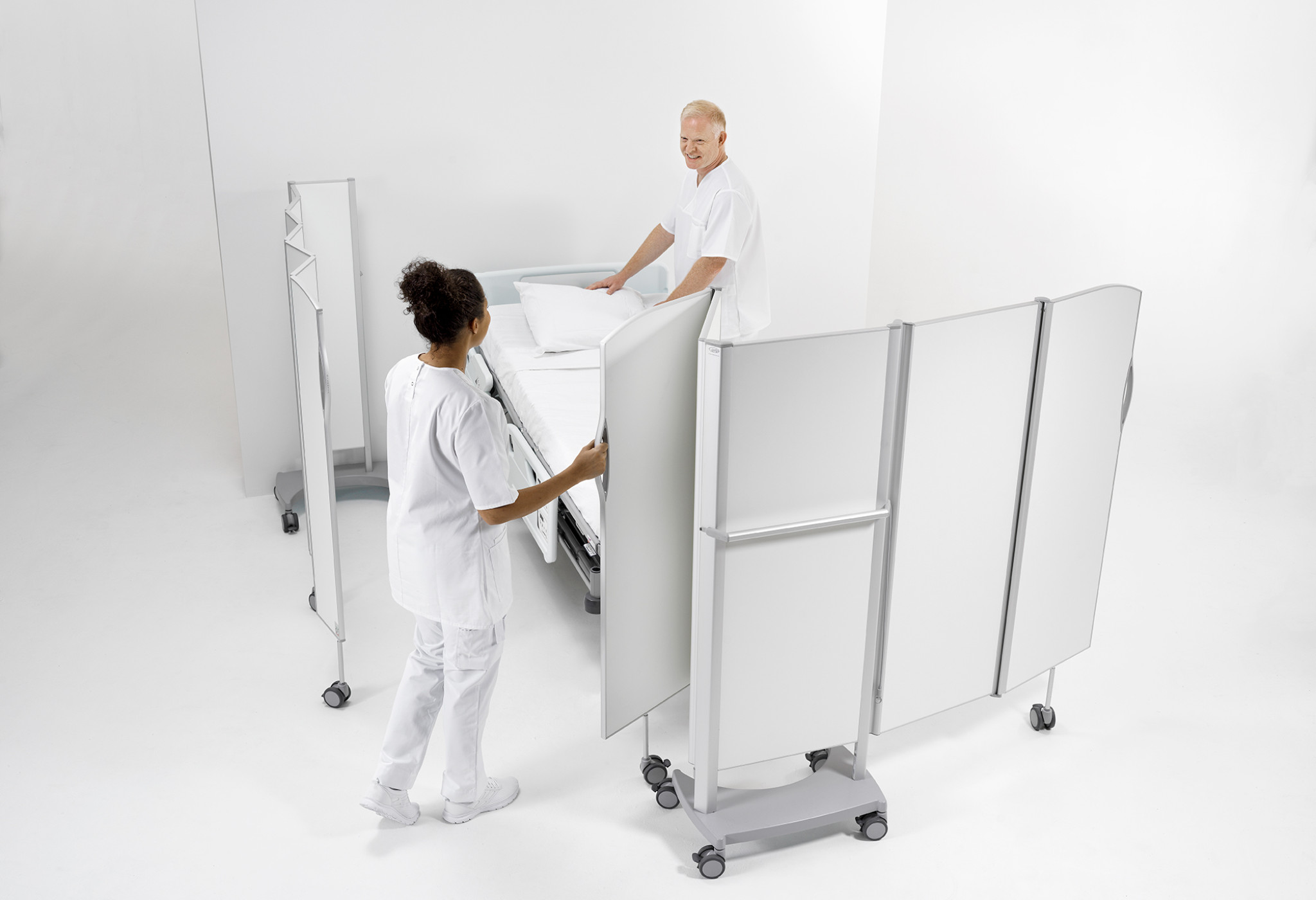
Silentia AB is a Swedish company that has developed modular healthcare screens for hospitals and clinical environments for more than 30 years. Their products must meet strict hygiene and infection control regulations while remaining durable for intensive cleaning and frequent reconfigurations. The company already incorporates elements such as modular design, durability and design for longevity and are seeking a structured overview of how circularity can be implemented across the value chain, while maintaining their quality and performance. This case study focuses specifically on bed-end-screens in the Nordic market, designed to replace disposable cubicle curtains that generate significant waste.
Opportunity
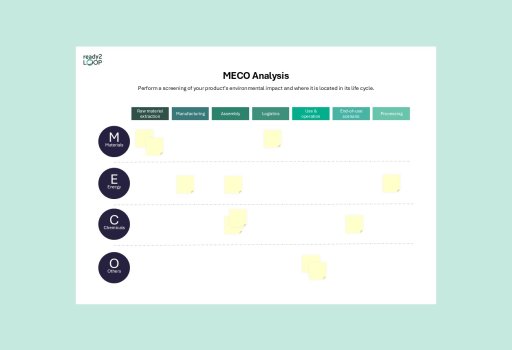
Silentia enjoys a first-mover advantage and a reputation for high-quality, durable designs that differentiate it from competitors. While the screens are highly suitable for circularity – featuring steel and aluminium components designed for longevity and disassembly – the company currently has limited control over the products once they leave the factory. This presents a strategic opportunity to implement circular solutions that enable end-of-life control.
By regaining ownership or management of outlived products, Silentia can move beyond basic repair services and establish a model that captures material value through professional refurbishment and remanufacturing, extending the product's functional life and reducing waste.
Transition path
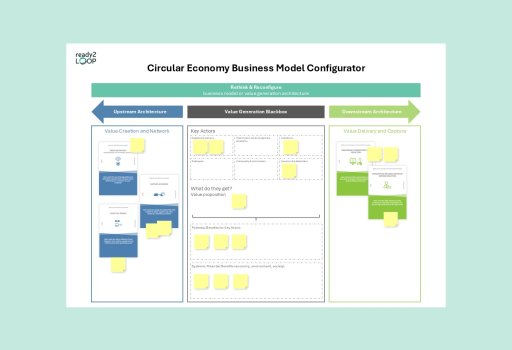
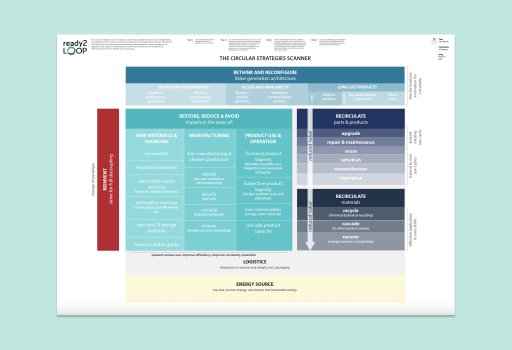
The recommended transition path prioritises the combination of a key strength, “Use, Support & Maintenance”, and a key opportunity, “Take-back & End-of-Life Strategy”.
Both dimensions can be addressed through evolving the existing service agreements into an extended format that includes a take-back system at the end of the service period. While current agreements already allow hospital staff to order spare parts for repairs, the new model would integrate reverse logistics through existing partners like DB Schenker. This enables the company to manage product drop-off and pick-up systematically, ensuring screens are returned for proper handling and recirculation without adding to the administrative burden of hospital staff.
Additionally, Silentia should provide clear communication on handling of the screens in the use phase to induce longevity of the products.
Outcome
Implementing a takeback system at end-of-life represents a significant opportunity for Silentia to advance its Circular Economy readiness and strengthen its role within the Circular Value Chain. By taking responsibility for the full life cycle of the product, the company will be able to improve its environmental performance, enhance resource efficiency and increase its market competitiveness.
From an environmental perspective, a takeback system would enable Silentia to reduce reliance on virgin materials by ensuring that products and components are returned, properly handled, and recirculated. Activities such as refurbishment and remanufacturing would extend product lifespans, reduce waste generation, and support climate and sustainability targets.
Economically, seizing value from outlived products will ensure the generation of new value streams, reduce production costs and mitigate exposure to the fluctuation of raw material prices, resulting in a more resilient supply chain. Reintroducing repaired and remanufactured screens to the market could provide monetary incentives to attract new customers and reduce post structural waste. It would also foster more collaborative and trustworthy relationships with the existing customers and partners, boosting brand awareness and strengthening the brand image.
Overall, a take-back scheme would strengthen end-of-life circularity, support regulatory compliance, and reinforce Silentia’s sustainability and competitiveness, positioning the company as a frontrunner in the circular economy within the healthcare equipment market.
Reflections
A critical assumption is that the solution must not add to the workload of hospital personnel, as clinical staff operate under extreme time pressure. Consequently, Silentia must manage the most time-consuming aspects of the solution internally or in collaboration with external partners, such as DB Schenker. At the same time, implementation requires resources and access to hospital facilities, making effective collaboration essential. For hospitals to participate, they must clearly perceive the value of the solution.
Furthermore, previous attempts at leasing models failed due to hospital budgeting structures; therefore, future models must align with existing financial practices rather than attempting to introduce new ownership paradigms.
Next step
Following the accelerator program, a key focus will be to identify economic incentives and contractual terms that make an extended service agreement with end-of-life take-back attractive to hospitals. Another important next step is to investigate the potential of leveraging Silentia’s existing logistics partners to support reverse logistics, enabling product return with minimal disruption to hospital operations.
Micro-Accelerator. January 2026 - offered by ready2LOOP & DTU Course, Design for Circular Economy
Company
Silentia AB
Focus area for transition path

Use, Support & Maintenance
Product Manufacturers

Takeback & End-of-Life Strategies
Product Manufacturers