Engaging in a service-oriented business model and increasing product modularity for VELUX’s roof windows
“We are curious and eager to broaden our perspectives and get some fresh viewpoints, new ways of thinking and also inspiration that can challenge the assumptions that is within the organisation. [...] We would really like to take the next steps within sustainability and especially circularity of our products, and therefore we think this is a great opportunity for us to start exploring where to begin, what to prioritise and so on.”
– Didde Marie Dobel, Senior Sustainability Specialist, VELUX
Opportunity
VELUX has the opportunity to evolve beyond product delivery by entering the use-phase service market. By building on existing maintenance pilots, the company can improve lifecycle knowledge and reduce material uncertainty. This shift addresses identified gaps in servitisation readiness and prepares VELUX for a changing market sector that increasingly rewards circularity and resource efficiency.
Path
The transition focuses on formalising use-phase services and improving product modularity to facilitate easier repairs. By expanding current maintenance activities into a coordinated service offering, VELUX can increase interaction with installed products. This gradual approach allows the company to build organisational readiness and data management systems before fully committing to advanced models like "Windows-as-a-Service".
Outcome
The transition will result in enhanced lifecycle control and improved understanding of installed product conditions. By reducing barriers to repair through design changes, VELUX can extend product lifetimes and increase material efficiency. These outcomes position VELUX as a more resilient and circular player in the European construction market, capable of meeting evolving client expectations for sustainable building components.
Context
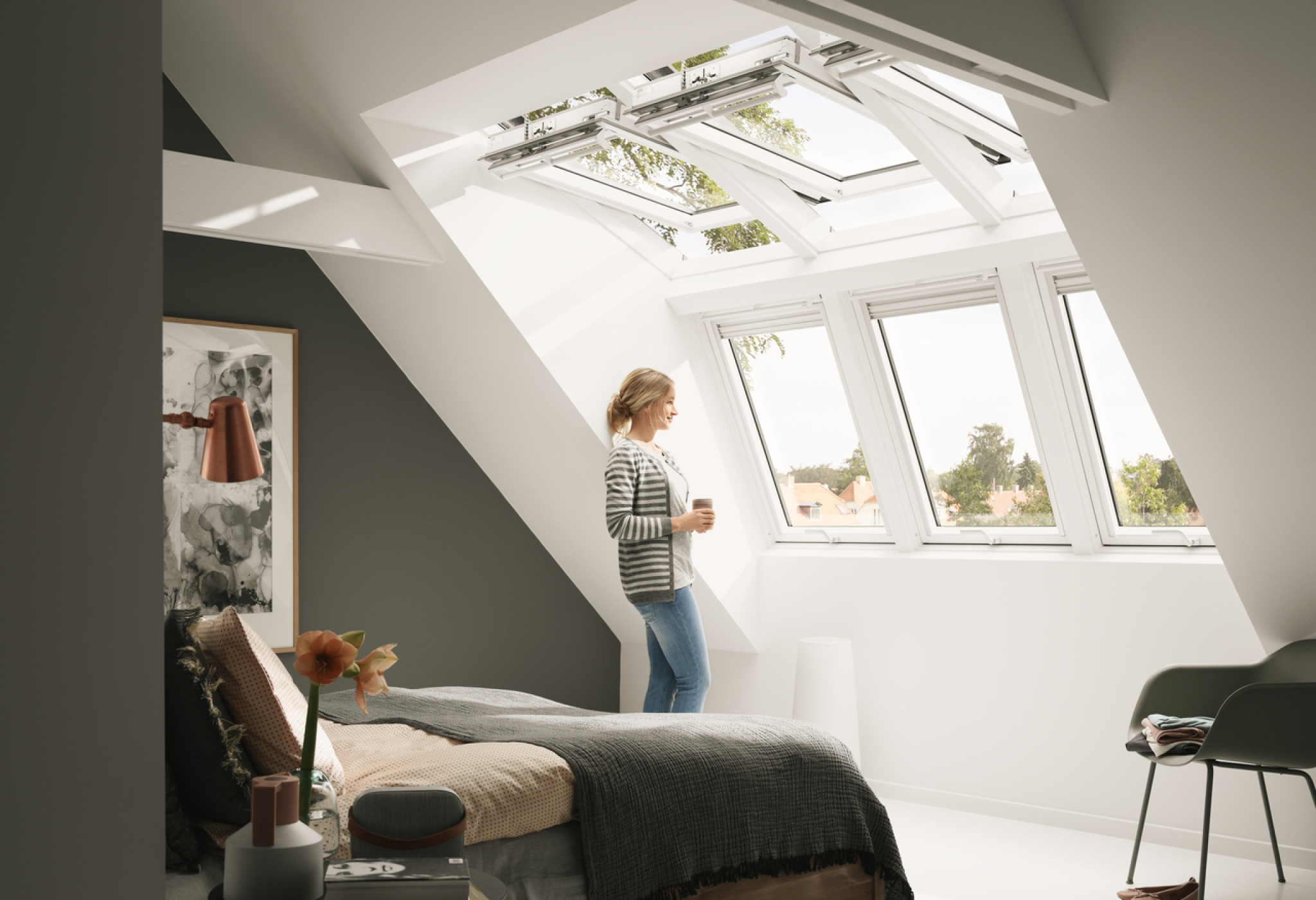
VELUX is a global leader in roof windows and daylight solutions, with operations in 37 countries. This case study focuses on standard sloped roof windows for the European B2B market, targeting end-consumers within a broader construction value chain of installers and contractors. As the construction industry faces increasing pressure regarding resource use and waste, VELUX views circularity as a vital opportunity to reduce environmental impacts and explore value beyond traditional linear sales.
Opportunity
VELUX currently excels in lean manufacturing and durable design, but circular value creation essentially stops at the point of sale. There is a strategic opportunity to expand into the use phase of windows to extend product lifetimes and recover high-value components.
Analysis indicates that while VELUX has strong production capabilities, it shows lower maturity in use-phase services and lifecycle data management. As regulatory and market expectations for lifecycle responsibility grow, VELUX can bridge this gap by testing and scaling service-based interventions, allowing the company to retain material value and strengthen its competitive position.
Transition path
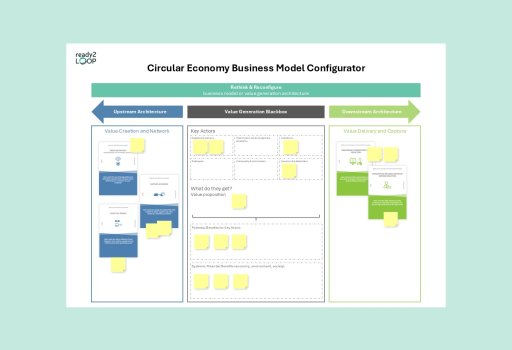
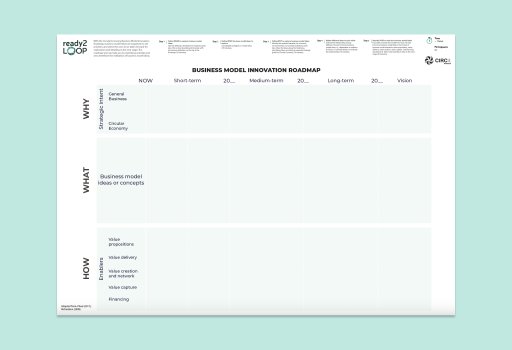
The transition prioritises the two dimensions, “Strategy and Business Model Innovation” and “Product and Service Innovation”. The recommended path involves a phased transition toward a service-based business model. It begins by formalising and coordinating existing maintenance, inspection, and repair activities into a unified service practice.
To support this at scale, VELUX must introduce product design guidelines that prioritise modularity and component accessibility, ensuring that repairs and refurbishments can be done non-destructively. As these capabilities mature, the company can increase lifecycle oversight, using condition knowledge to prevent value loss and enable advanced recovery practices such as take-back systems and refurbishment.
This sequence ensures the organisation builds the necessary internal alignment and data capabilities before taking on more complex circular risks.
Outcome
Implementation of this path shifts VELUX from a product-based model with limited post-sale interaction to one with proactive lifecycle responsibility. Increased modularity and accessibility lower the barriers to refurbishment and component replacement, while improved data management enhances operational feasibility.
This transition enables VELUX to respond effectively to future circular economy requirements and retain material value throughout the product's 30-year lifespan. Ultimately, this strengthens the brand's sustainability strategy while opening new, recurring revenue streams through dedicated circular services.
Reflections
Transitioning to a full service-based model is a "difficult nut to crack," as roof windows are deeply integrated into buildings and have very long lifetimes (30+ years) with historically low maintenance needs. Current organisational structures and data capabilities are not yet mature enough to support large-scale service delivery, necessitating a gradual, capability-driven approach.
Next step
VELUX should focus on strengthening internal governance for service development by building upon its current repair activities. The company is encouraged to launch targeted pilots in B2B or renovation-intensive segments to test service value propositions and lifecycle data practices. Finally, it should systematically evaluate the scalability of these pilots to refine a long-term, service-oriented circular strategy.
Micro-Accelerator. January 2026 - offered by ready2LOOP & DTU Course, Design for Circular Economy
Company
VELUX Danmark A/S
Focus area for transition path

Strategy & Business Model Innovation
Product Manufacturers

Product & Service Innovation
Product Manufacturers