Transitioning from material-recycling to product-level value recovery
“Going from a linear business into more circular ways, the daily operational challenges rapidly consume your time, and you rarely have the luxury of taking a step back to look at the broader picture. Having an outside view and circular assessment of Grundfos is an important part of ensuring we are on the right track and do not miss any opportunities”
– Jacob Arnbjerg, Lead Sustainable Material Specialist, Grundfos
Opportunity
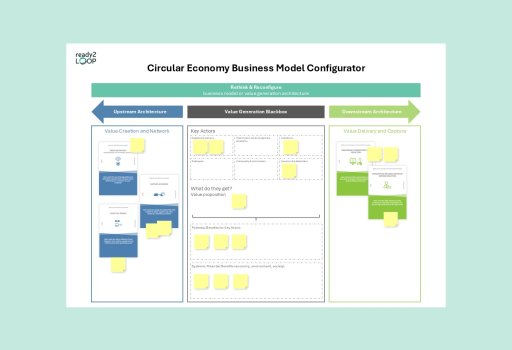
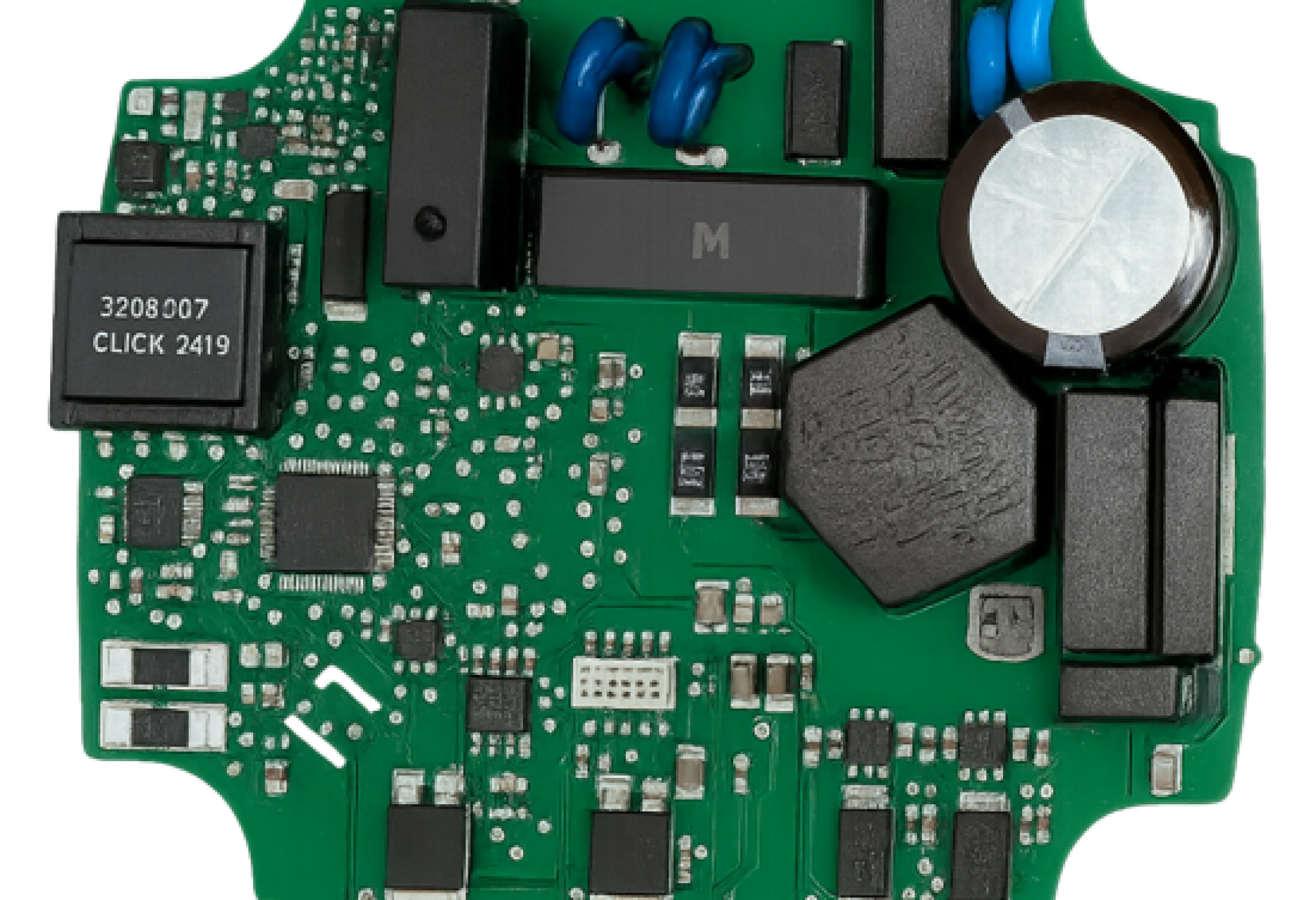
Grundfos has a major opportunity to improve its circularity by moving from bulk recycling to component-level recovery of PCBs. Since the primary cost of PCBs lies in their components and manufacturing, finding a way to reuse these parts rather than selling them as scrap metal provides significant economic incentives. This strategy positions Grundfos as a leader in a price-sensitive market where high-value recovery is a burgeoning competitive advantage.
Path
The transition involves standardising PCB handling and developing as well as optimising the current takeback system. Grundfos will then seek collaborative partnerships with electronic waste experts for component remanufacturing or establishing in-house competencies. Finally, the company will implement design-for-disassembly improvements to create a closed-loop flow for PCBs, enhancing circular performance across the value chain. The company can thereby move from material-focused recycling toward sophisticated component and product-level value recovery.
Outcome
Implementation will result in a phased increase of circular value, starting with component sorting for better recycling through new partnerships and progressing to data-driven diagnostics. The ultimate outcome is the creation of a 2nd-life product line utilising remanufactured PCBs. This approach ensures that Grundfos retains the highest possible value from its electronics while using insights from failure data to improve the longevity and design of future products.
Context
Grundfos is a leading Danish pump manufacturer, known for creating the first energy-saving circulation pumps with an "A" energy label. The company already operates a take-back program that allows distributors to return old products to their headquarters in Bjerringbro for disassembly. However, the Printed Circuit Boards (PCBs) from these products are currently sold by weight for scrap metal recycling, resulting in loss of value tied to the original manufacturing process and the electronic components themselves.
Opportunity
PCBs represent a significant portion of a pump's cost, and most of that value is embedded in the electronic components and manufacturing labour rather than just the raw metals. While Grundfos has a high readiness for collection through its take-back program, it lacks maturity in new value creation and component recovery.
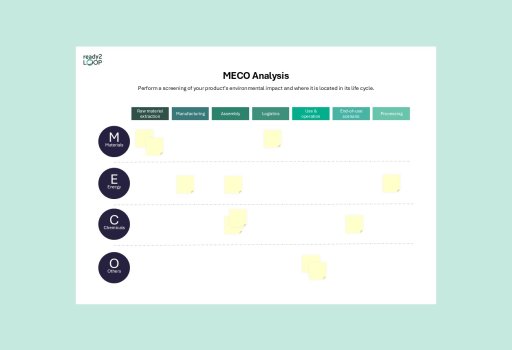
PCBs are essential to circulator function and typically remain in use for over a decade. Analysis identifies a significant environmental hotspot at the End-of-Life (EoL) stage and as the Extended Producer Responsibility (EPR) regulations shifting toward stricter recycling mandates, Grundfos has a strategic opportunity to develop external supplier partnerships to improve component recovery and extend lifecycles.
By transitioning from basic recycling to component-level reutilization, Grundfos can recoup more value and gain a competitive edge in a price-sensitive industry. This is particularly relevant as major competitors like Wilo are also adopting take-back systems and sustainable practices, making high-value circularity a key differentiator in a competitive landscape that will be rapidly altered by upcoming EPR requirements.
Transition path
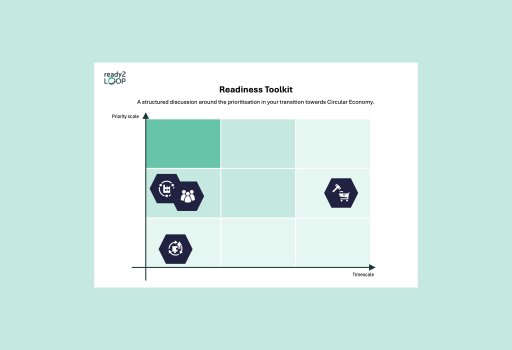
The transition path prioritises improvements within “Manufacturing & Value Chain” and “Takeback & End-of-Life Strategies” and focuses on establishing the organisational, technical and informational prerequisites for higher-value PCB recovery. Initially, Grundfos must standardise procedures for PCB extraction and handling as well as strengthening collection schemes and incentivising pump returns.
A critical technical step is the integration of data collection during the use-phase combined with diagnostic testing protocols upon return. This data allows the company to identify specific failure modes and assess whether a board is feasible for remanufacturing. In parallel, attention is directed towards identifying and establishing in-house competencies or new partnerships capable of enabling higher recycling rates or potential remanufacturing of selected PCB components. In this context, specialised partners with expertise in electronic waste processing and value recovery are especially relevant.
The final stage of the transition path focuses on “Materials in Manufacturing”, where the opportunities for improving design-for-disassembly (DfD) should be explored. This would support more efficient EoL processing and contribute to the development of a closed-loop system for electronic components.
Following this Transition Path Grundfos can gradually move away from third-party material recycling and toward product-level value recovery.
Outcome
The proposed transition is deployed in three phases to maximise value recapture. In the short term, Grundfos will de-solder and sort components from returned PCBs based on their specific recycling value to increase margins as well as mapping and establishing new partnerships that will support this transition. External partners with specialised expertise in electronic waste processing could extract greater value from PCB. As a result, electronic waste is reduced through recycling or remanufacturing, and material resources
are utilised more efficiently.
The mid-term focus involves using operational data to understand failure points, which informs both future design improvements and remanufacturing assessments. Through this transition, Grundfos would assume greater responsibility in the post-use stage, supported by an improved understanding of returned products and their condition within the takeback system.
In the long term, the company aims to introduce 2nd-life products featuring remanufactured PCBs into its catalogue. Boards unfit for remanufacturing will still be disassembled for parts or sent to decentralised recycling plants. Ultimately, this shifts Grundfos from a linear waste model to a high-value circular loop that minimises structural waste.
Reflections
The successful extraction of key materials and components during remanufacturing and recycling is assumed, as the technical feasibility, particularly regarding electrical components, has not been tested. Despite this, the Transition Path can potentially be cost effective by reducing the amount of electrical components bought.
The transition to selling 2nd-life products faces legislative and regulatory hurdles, such as requirements to weld electrical housings shut and strict energy efficiency requirements that remanufactured units must still meet.
Next step
Next steps for Grundfos will be to discuss and debate the option of doing the remanufacturing operation inhouse or partner with an external enterprise to utilise their capabilities. The priority would be to keep the remanufacturing of the PCBs in-house, by detaching electrical components that can be directly recirculated back into production of new circuit boards.
Grundfos should further prioritise the collection of data regarding the state and function of its pumps during the use phase. Identifying potential points of failure is essential in the first steps of expanding circular opportunities from material recovery to high-value part and product recovery.
Micro-Accelerator. January 2026 - offered by ready2LOOP & DTU Course, Design for Circular Economy
Company
GRUNDFOS A/S
Focus area for transition path

Manufacturing & Value Chain
Product Manufacturers

Takeback & End-of-Life Strategies
Product Manufacturers