Circular tableware: Exploring recirculation through a new business model

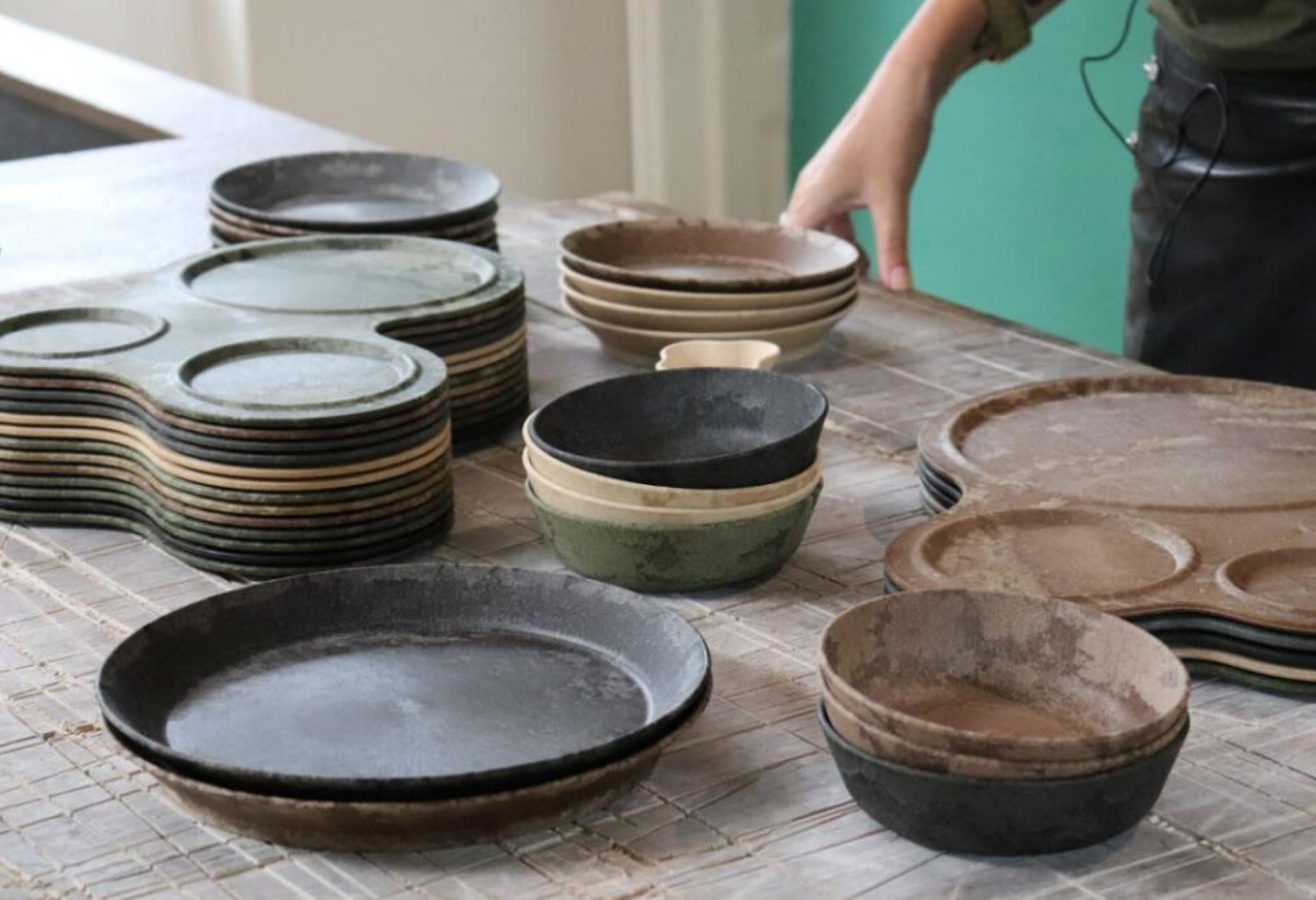
“The first Luups product emerged from working with food waste. Through this process, I discovered how incredibly interesting the material is and the many advantages it offers when working with professional kitchens. It consists of 50% polypropylene (PP) and 50% wood from certified forestry, making it a more sustainable alternative than 100% PP. A key focus for me is defining the right end-of-life solution for Luups products. My ambition is to use recycled PP in the future and to develop a take-back system that enables us to collect used products and transform them into new Luups products — creating a truly circular solution that is both functional and economically viable.” – Maj Toppenberg, Founder and CEO of Luups
Opportunity
Luups has the opportunity to leverage the durability of its composite material by transitioning toward a service-based model. This shift addresses the challenge of limited after-sale control, allowing the company to facilitate take-back and material recovery to extend product value and brand relevance across multiple use cycles.
Path
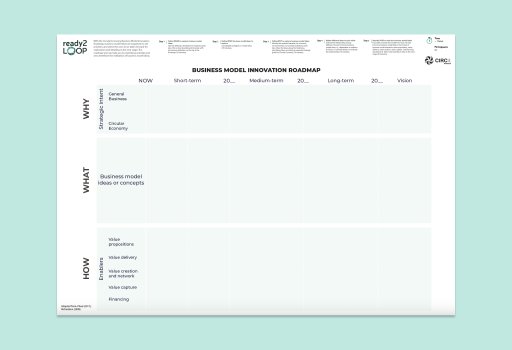
The roadmap involves implementing “Strategy & Business Model Innovation” alongside “Take-back & End-of-Life Strategies”. The path follows a multi-stage approach: long-term leasing for core clients, shorter secondary leases for events, and a final stage where worn materials are remanufactured into non-food-grade products to extend their systemic value.
Outcome
This transition will result in a structured take-back system that preserves material value through multiple reuse loops and cascading. By transitioning to a multi-loop service model, Luups can reduce its reliance on virgin resources, differentiate its brand through verified circular performance, and establish a stable foundation for future growth.
Context
Luups ApS is a micro-business that develops tableware for professional catering and food-service environments, such as hotels and canteens. Their products are made from a custom composite of 50% polypropylene (PP) and 50% wood fibres, a material chosen for its durability and suitability for industrial washing. Currently, the company operates a product-oriented business model where customers purchase and own the items, leaving the responsibility for storage and end-of-life handling entirely to the client.
Opportunity
Working with Luups in its infancy offers a unique opportunity to embed circularity into a small business from the ground up. As the wood-plastic composite is core to the company's brand identity and functional appeal, the focus is on maximising the circularity of the existing material selection rather than redesigning it.
A major opportunity exists to transition toward increasingly circular operations at a systemic level. Luups is currently planning pilot projects related to product–service systems (PSS) and take-back schemes for takeaway canteen products. This represents an opportunity to enter a relatively uncontested market, where single-use products are still prevalent and competition in reusable takeaway packaging remains limited. Combined with the attractive functional properties of LUUPS’ products, this creates promising prospects.
Luups is interested in investigating options for collecting end-of-life (EoL) products and using them in new applications that leverages the material’s properties, either within the same sector or by selling the recovered material to third parties for recycling or cascading purposes. Gaining control over EoL would enable Luups not only to recycle but also potentially to reuse its products, which could significantly increase the company’s level of circularity. Although at present, recycled material cannot be used for food-contact products, as regulations in practice prohibit the use of recycled PP for this purpose.
Transition path
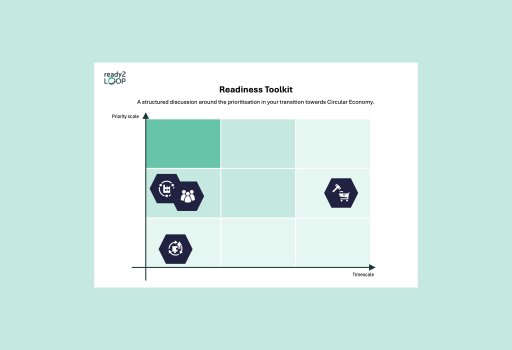
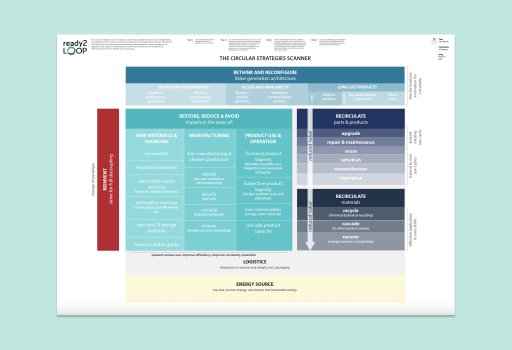
Two high-potential dimensions for circularity are identified, “Strategy & Business Model Innovation” and “Take-back & End-of-Life Strategies” and creates the foundation for the developed Transition path.
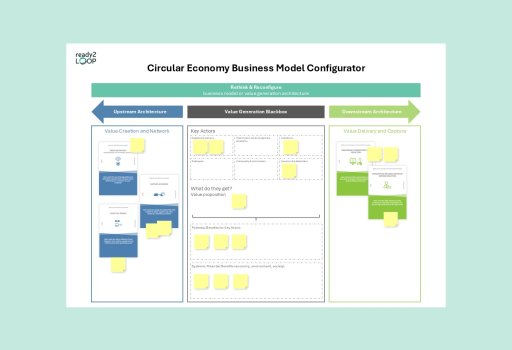
The proposed new business model is a multi-loop system where products are reused multiple times before the material is cascaded into new products. A take-back programme ensures circulation within or between loops. New products enter the first loop through long-term leases with core clients, with security deposits and gratuity discounts incentivising returns at lease-end. Collected products move to a second loop, where durability and aesthetics are less critical. Here, shorter leases target clients like festivals, summer camps, and pop-ups, who need affordable, robust equipment without long-term commitments. Products at the end of their usable life in both loops are transformed into non-food-contact items, such as soap dispensers, trays, toothbrush holders, and bins, extending material value further. These new products are sold to the same client base as the initial loop.
This roadmap prioritises business model innovation over material changes to protect the company's unique value proposition.
Outcome
Implementing this roadmap will provide Luups with a structured path toward increased circularity and reduced environmental impact. The new model is expected to reduce virgin material demand by displacing competitors who manufacture single-use products. By retaining control throughout the product lifecycle, Luups strengthens customer retention and expands its brand into new market segments.
Additionally, the cascading of materials into secondary products ensures that material value is utilised even after the original tableware is no longer fit for its primary function. These outcomes collectively establish a feasible and scalable foundation for circular operations within the next five years.
Reflections
The effectiveness of the system will rely on user behaviour and consistent logistical management by Luups and its partners. Several uncertainties remain regarding the take-back system, including how products should be collected, transported and stored in practice, how LUUPS or its resellers should communicate the solution to end-users and what the return on investment will be. Furthermore, LUUPS should establish partnerships with material suppliers that can handle the return product (grinding and pelleting).
Next step
Luups should focus on piloting the proposed leasing initiatives and mapping key activities to scale them. A critical next step is using the “Be Aware of Unintended Consequences” tool to evaluate risks like increased transport emissions from the take-back system. The company should also maintain engagement with the ready2LOOP platform to refine its action plan for each business dimension.
Micro-Accelerator. January 2026 - offered by ready2LOOP & DTU Course, Design for Circular Economy
Company
Luups ApS
Focus area for transition path

Strategy & Business Model Innovation
Product Manufacturers

Takeback & End-of-Life Strategies
Product Manufacturers